Safou (African pear)
Dacryodes edulis
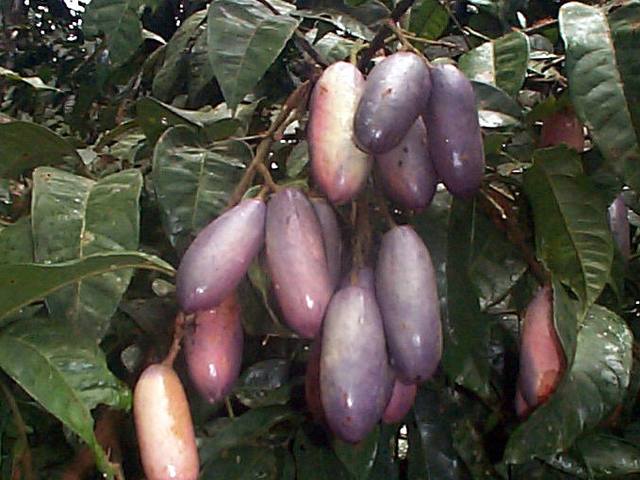
Violet fruit with buttery, oily flesh, softened in hot water or roasted and eaten with maize or plantain.
Hardiness: zones 10 to 12
Light: full sun
Size: about 50 ft tall, 30 ft wide
Harvest: June to September
From: Central and West Africa
Here: Too tender to overwinter outdoors on the Lake Erie shore (zone 6b to 7a): grow it in a pot and bring it in, or treat it as an annual.
Good for: food, wildlife.
Native to: West & Central African forests. Hardy in zones 10 to 12.
The story
Safou trees stand in village compounds from Nigeria to the Congo basin, and the fruit arrives in markets with the first maize, the two eaten together. The flesh is rich in oil, like an avocado.
Planting
A humid tropical climate, full sun and deep soil.
Growing
Seedlings bear in five to seven years. Trees are male, female or both, so plant several.
Harvest and use
Pick when the skin turns from pink to deep blue-violet. Soften in hot water, or roast on embers for a few minutes, and eat the buttery flesh with salt.
What to watch for
The fruit spoils within days of picking. It does not tolerate frost or long dry seasons.
See if Safou (African pear) fits your yard
Free planner: enter your ZIP for frost dates, climate fit and a sowing calendar. No account, no ads, no tracking cookies.
More tropical and subtropical food plants
- Ambarella (vī)
- Long pepper (pippali)
- Mamey apple
- Stinking toe (West Indian locust)
- Chiuri (Indian butter tree)
- Timla (Roxburgh fig)
General guidance, not professional advice. Conditions vary by yard and year; for local specifics ask your county extension office. Never eat a wild plant you cannot identify with certainty. Traditional uses are shared as history, not medical advice. © 2026 Sean Priest · Irie Orchard. Terms & credits · Privacy · Home