Sumac (Sicilian or tanner's sumac)
Rhus coriaria
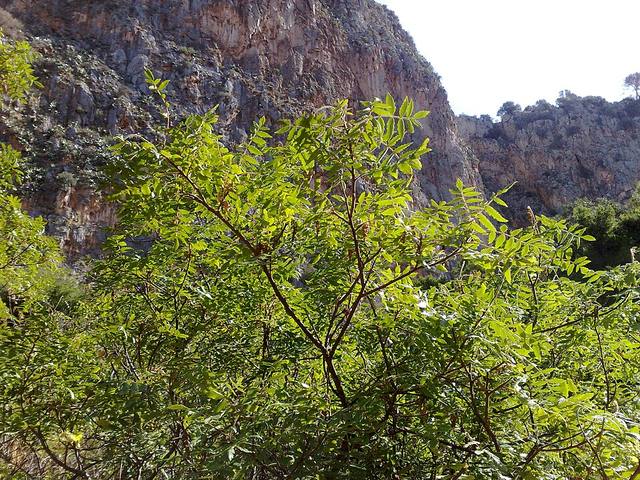
The sour red spice on kebabs and salads, ground from the dried fruit clusters.
Hardiness: zones 8 to 10
Light: full sun
Size: about 10 ft tall, 8 ft wide
Harvest: August to September
From: Mediterranean to the Caucasus and Iran
Drought-hardy once established
Here: Too tender to overwinter outdoors on the Lake Erie shore (zone 6b to 7a): grow it in a pot and bring it in, or treat it as an annual.
Good for: food, pollinators, wildlife.
Native to: Mediterranean, Caucasus, Sahara & Arabian deserts. Hardy in zones 8 to 10.
The story
Before lemons reached the Roman world, cooks soured their food with sumac. It is still on every table from the Levant to the Caucasus, and it is the tang in za'atar. Its leaves once tanned the finest leathers.
Planting
Full sun and dry, stony, well-drained soil in a climate with hot summers.
Growing
No care. Remove suckers if you want a single shrub.
Harvest and use
Cut the dense red fruit clusters in late summer before rain washes them. Dry them, rub the fuzz off the seeds and sieve. Sprinkle it on onions, eggs, grilled meat and salad.
What to watch for
It suckers. Do not confuse it with white-berried poison sumac of North American swamps, a different plant.
See if Sumac (Sicilian or tanner's sumac) fits your yard
Free planner: enter your ZIP for frost dates, climate fit and a sowing calendar. No account, no ads, no tracking cookies.
More perennial vegetables, greens and herbs
- Tejpat (Indian bay leaf)
- Jimbu
- Mountain pepper (pepperberry)
- Bush tomato (kutjera)
- Anise myrtle
- Cretan dittany (diktamo)
General guidance, not professional advice. Conditions vary by yard and year; for local specifics ask your county extension office. Never eat a wild plant you cannot identify with certainty. Traditional uses are shared as history, not medical advice. © 2026 Sean Priest · Irie Orchard. Terms & credits · Privacy · Home