Sunchoke
Helianthus tuberosus
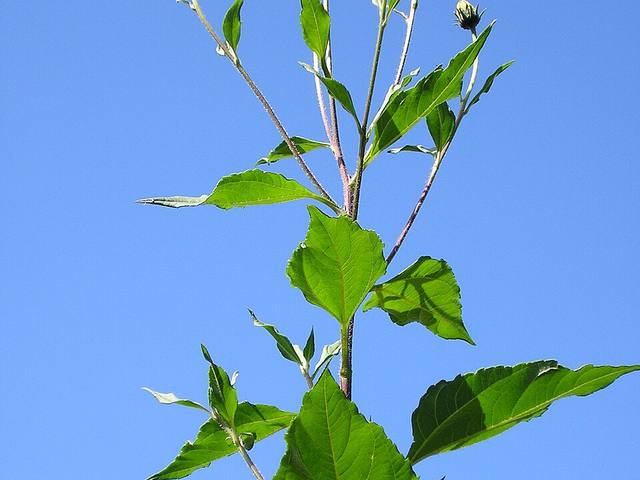
Sunflower above, crunchy tubers below; it spreads.
Hardiness: zones 3 to 9
Light: full sun
Size: about 8 ft tall, 3 ft wide
Harvest: October to March
From: North America
Drought-hardy once established
Here: Hardy in the Lake Erie shore climate (zone 6b to 7a), so it can live outdoors in the ground.
Good for: food, pollinators.
Native to: Northeast, Southeast, Midwest & Great Lakes, Great Plains & Texas, Eastern Canada. Hardy in zones 3 to 9.
The story
Sunchokes are a sunflower native to eastern North America, grown by Indigenous farmers long before Europeans carried the tubers home and renamed them Jerusalem artichokes, though they have nothing to do with Jerusalem or artichokes. The name is probably a mangling of girasole, Italian for sunflower.
Planting
Plant tubers in early spring, 4 inches deep and a foot apart, in full sun. Give them a bed with a hard edge, or a big tub: every piece you miss becomes next year's plant.
Growing
Almost no care. Stake or hill the tall stems in windy spots, and water in a long drought.
Harvest and use
Dig after the first frosts, when the tubers turn sweeter, and keep digging through winter whenever the ground allows. Roast, mash or slice raw; they store better in the soil than in the fridge.
What to watch for
They spread with enthusiasm. The inulin that makes them sweet also makes some people gassy, so start with a small helping.
See if Sunchoke fits your yard
Free planner: enter your ZIP for frost dates, climate fit and a sowing calendar. No account, no ads, no tracking cookies.
More perennial vegetables, greens and herbs
General guidance, not professional advice. Conditions vary by yard and year; for local specifics ask your county extension office. Never eat a wild plant you cannot identify with certainty. Traditional uses are shared as history, not medical advice. © 2026 Sean Priest · Irie Orchard. Terms & credits · Privacy · Home