English walnut
Juglans regia
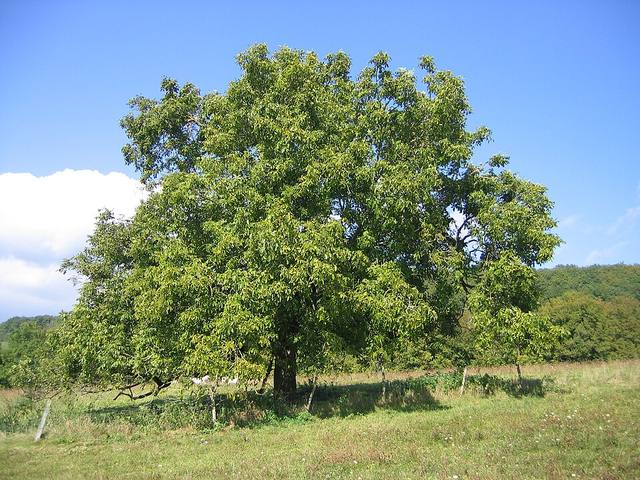
Its roots release juglone; keep it away from tomatoes.
Hardiness: zones 5 to 9
Light: full sun
Size: about 50 ft tall, 40 ft wide
Harvest: September to October
From: Central Asia
Here: Hardy in the Lake Erie shore climate (zone 6b to 7a), so it can live outdoors in the ground.
Good for: food, wildlife.
Native to: Central Asian steppe, Himalaya & Indian hill country, Caucasus. Hardy in zones 5 to 9.
The story
The Persian walnut spread from the mountains of Central Asia along the Silk Road; Greeks called it the royal nut and Romans planted it across their empire. The walnut forests of Arslanbob in Kyrgyzstan, the largest wild stand on earth, are still harvested by whole villages each autumn.
Planting
Full sun, deep, drained soil, and room for a 50-foot crown. Plant a grafted variety; two varieties cross-pollinate better. Keep it 50 feet from tomatoes and apples, which its roots poison.
Growing
Water deeply in dry summers for the first ten years. Prune only in late summer to avoid bleeding. It drops leaves late and leafs out late, dodging spring frost.
Harvest and use
Nuts drop in autumn as the hulls split; gather daily, hull, wash, and dry on screens for two weeks. They keep a year in the shell in a cool room.
What to watch for
Walnut husk fly, codling moth, and blight in wet springs; squirrels take their share.
See if English walnut fits your yard
Free planner: enter your ZIP for frost dates, climate fit and a sowing calendar. No account, no ads, no tracking cookies.
More nut trees
General guidance, not professional advice. Conditions vary by yard and year; for local specifics ask your county extension office. Never eat a wild plant you cannot identify with certainty. Traditional uses are shared as history, not medical advice. © 2026 Sean Priest · Irie Orchard. Terms & credits · Privacy · Home