Bread wheat
Triticum aestivum
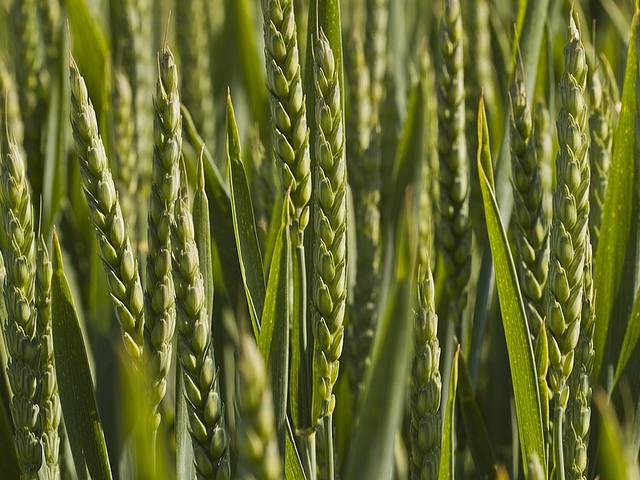
Born about 8,000 years ago when emmer crossed with a wild goat grass; now the most widely grown crop on earth.
Hardiness: zones 2 to 9
Light: full sun
Size: about 3.5 ft tall, 0.5 ft wide
Harvest: year-round
From: South of the Caspian Sea
Drought-hardy once established
Here: Hardy in the Lake Erie shore climate (zone 6b to 7a), so it can live outdoors in the ground.
Good for: food.
Native to: Mediterranean, Central Asian steppe, Sahara & Arabian deserts. Hardy in zones 2 to 9.
The story
Bread wheat was born about 8,000 years ago, south of the Caspian Sea, when farmed emmer crossed with a wild goat grass. It spread with farming across Europe and Asia and now covers more land than any other crop; the Great Lakes are major soft-wheat country.
Planting
Full sun and drained soil. In Ohio sow winter wheat in late September to October, an inch deep; spring wheat goes in as early as the soil can be worked.
Growing
Keep weeded early and give a little compost. Winter wheat sits low through the cold and races up in spring. A small bed of 100 square feet gives a few loaves' worth.
Harvest and use
Cut when the straw is gold and a grain dents but doesn't squash under a fingernail. Dry the bundles, thresh and winnow, then grind fresh for bread.
What to watch for
Birds, rust and mildew in damp weather.
See if Bread wheat fits your yard
Free planner: enter your ZIP for frost dates, climate fit and a sowing calendar. No account, no ads, no tracking cookies.
More annual vegetables, herbs and grains
General guidance, not professional advice. Conditions vary by yard and year; for local specifics ask your county extension office. Never eat a wild plant you cannot identify with certainty. Traditional uses are shared as history, not medical advice. © 2026 Sean Priest · Irie Orchard. Terms & credits · Privacy · Home