Flint and flour corn (maize)
Zea mays
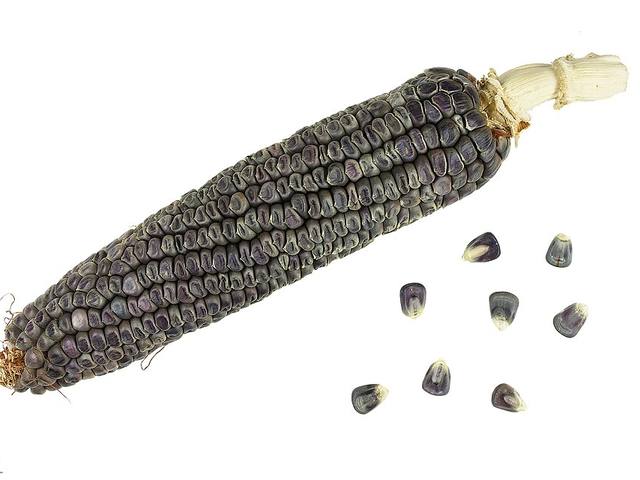
The grain corn of the milpa, dried on the stalk for meal, hominy and tortillas; grow it with beans and squash.
Hardiness: zones 3 to 11
Light: full sun
Size: about 8 ft tall, 1.5 ft wide
Harvest: September to October
From: Mexico
Here: Hardy in the Lake Erie shore climate (zone 6b to 7a), so it can live outdoors in the ground.
Good for: food.
Native to: Mexico, Central America & the Caribbean, Desert Southwest. Hardy in zones 3 to 11.
The story
Maize was shaped from wild teosinte in southern Mexico about 9,000 years ago and became the grain of the Maya, the Aztec, the Inca and the farmers of the Eastern Woodlands. Flint and flour corns are the old kinds, dried on the stalk and ground or soaked in lime water for hominy and tortillas.
Planting
Full sun and rich soil, sown after the last frost when the ground is warm. Plant in a block, not one long row, so the wind can pollinate it.
Growing
Water well as the tassels show. Plant pole beans beside the stalks and squash between the hills, the way the milpa is grown.
Harvest and use
Leave the ears until the husks are paper-dry, then finish drying them indoors. Shell and store the kernels; grind for meal or cook with lime for hominy.
What to watch for
Raccoons, birds and earworms. Keep it well away from sweet corn, which it will spoil by crossing.
See if Flint and flour corn (maize) fits your yard
Free planner: enter your ZIP for frost dates, climate fit and a sowing calendar. No account, no ads, no tracking cookies.
More annual vegetables, herbs and grains
General guidance, not professional advice. Conditions vary by yard and year; for local specifics ask your county extension office. Never eat a wild plant you cannot identify with certainty. Traditional uses are shared as history, not medical advice. © 2026 Sean Priest · Irie Orchard. Terms & credits · Privacy · Home