Winged bean
Psophocarpus tetragonolobus
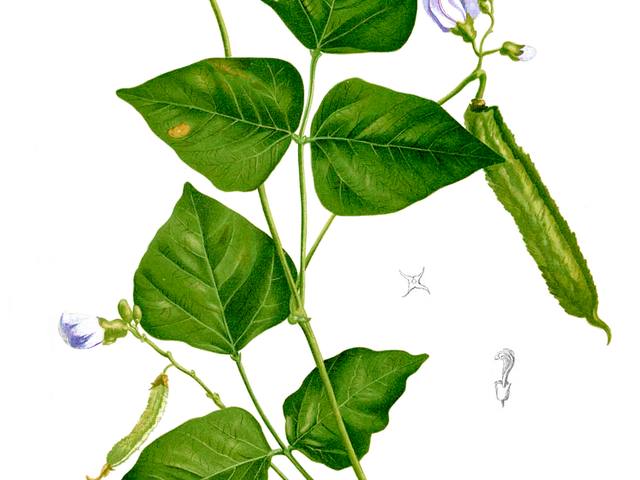
Frilled four-winged pods, with edible leaves, flowers, seeds and tubers too; a bean for the humid tropics.
Hardiness: zones 9 to 12
Light: full sun
Size: about 12 ft tall, 2 ft wide
Harvest: August to November
From: New Guinea and Southeast Asia
Here: Too tender to overwinter outdoors on the Lake Erie shore (zone 6b to 7a): grow it in a pot and bring it in, or treat it as an annual.
Good for: food, fixing nitrogen in the soil.
Native to: South & Southeast Asian tropics, New Guinea & Melanesia. Hardy in zones 9 to 12.
The story
The winged bean has been grown in New Guinea and across Southeast Asia for centuries as a plant that feeds a family from one vine: pods, leaves, flowers, seeds and tubers are all eaten.
Planting
Full sun, heat and humidity, with a strong trellis. Soak or nick the seed before sowing.
Growing
Most kinds flower only as days shorten, so the crop comes late. Look for day-neutral varieties outside the tropics.
Harvest and use
Pick pods young, while they still snap. Slice into salads and stir-fries; cook the leaves like spinach.
What to watch for
A frost before flowering means no crop. Nematodes in sandy soils.
See if Winged bean fits your yard
Free planner: enter your ZIP for frost dates, climate fit and a sowing calendar. No account, no ads, no tracking cookies.
More annual vegetables, herbs and grains
- Roselle (hibiscus tea)
- Mustard
- Garden egg (African eggplant)
- Egusi melon
- Lima bean (butter bean)
- Scarlet runner bean
General guidance, not professional advice. Conditions vary by yard and year; for local specifics ask your county extension office. Never eat a wild plant you cannot identify with certainty. Traditional uses are shared as history, not medical advice. © 2026 Sean Priest · Irie Orchard. Terms & credits · Privacy · Home