Winter squash and pumpkin
Cucurbita maxima, C. moschata
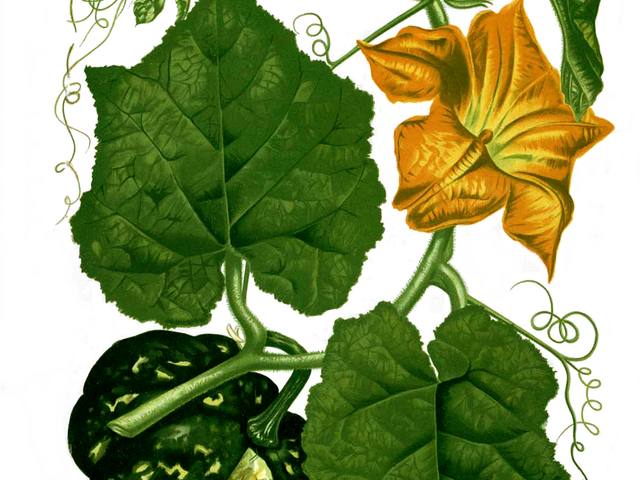
One of the Three Sisters; cures on a sunny porch and keeps all winter.
Hardiness: zones 2 to 11
Light: full sun
Size: about 2 ft tall, 10 ft wide
Harvest: September to October
From: Americas
Here: Hardy in the Lake Erie shore climate (zone 6b to 7a), so it can live outdoors in the ground.
Good for: food, pollinators.
Native to: Mexico, Central America & the Caribbean, Tropical South America. Hardy in zones 2 to 11.
The story
Squash is the oldest of the Three Sisters, grown in the Americas for about ten thousand years, well before corn or beans. Its big prickly leaves shade the soil at the feet of the other two and keep the raccoons thinking twice.
Planting
Sow after the last frost in rich, warm soil, in hills 4 to 6 feet apart, in full sun. Each plant wants a wheelbarrow of compost and plenty of room.
Growing
Water at the base, deeply. Let the vines run. Bees must visit the flowers, so skip the sprays.
Harvest and use
Harvest when the rind resists a thumbnail and the stem turns corky, before hard frost. Cure in a warm place for ten days, and the fruit keeps for months. The seeds, flowers and young shoots are all good to eat.
What to watch for
Squash vine borer, squash bugs and powdery mildew. Butternut types shrug off the borer.
See if Winter squash and pumpkin fits your yard
Free planner: enter your ZIP for frost dates, climate fit and a sowing calendar. No account, no ads, no tracking cookies.
More annual vegetables, herbs and grains
General guidance, not professional advice. Conditions vary by yard and year; for local specifics ask your county extension office. Never eat a wild plant you cannot identify with certainty. Traditional uses are shared as history, not medical advice. © 2026 Sean Priest · Irie Orchard. Terms & credits · Privacy · Home