Yarrow (native)
Achillea millefolium
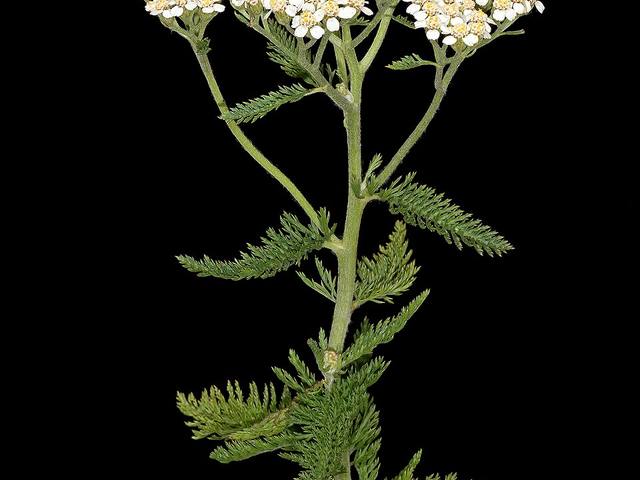
Feathery leaves, flat flower heads for tiny wasps that eat aphids.
Hardiness: zones 3 to 9
Light: full sun
Size: about 2 ft tall, 1.5 ft wide
From: Northern Hemisphere
Drought-hardy once established
Here: Hardy in the Lake Erie shore climate (zone 6b to 7a), so it can live outdoors in the ground.
Good for: pollinators, mining nutrients for the compost pile, butterfly and moth caterpillars, traditional use.
Native to: Northeast, Southeast, Midwest & Great Lakes, Great Plains & Texas, Rockies & Great Basin, Desert Southwest, Pacific Northwest, California, Alaska, Eastern Canada, Western Canada, Northern Europe & the taiga, Temperate Europe, Central Asian steppe. Hardy in zones 3 to 9.
The story
Yarrow's Latin name remembers Achilles, who was said to have carried it to treat his soldiers' wounds. It grows right around the Northern Hemisphere, and nearly every people who met it found a use for it.
Planting
Full sun and lean, dry soil. It is a good plant for the strip the hose doesn't reach.
Growing
Cut it back after bloom for a second flush. Divide when the middle dies out.
Harvest and use
Flat flower heads are landing pads for tiny wasps, hoverflies and ladybugs that eat aphids. Leaves go in the compost as an activator, and it has a long history as a traditional herb.
What to watch for
It spreads by root in rich soil. Some people get a rash from the leaves.
Safety
Medicinal uses here are shared as history, not advice. Kitchen amounts are fine for most people, but teas, tinctures and supplements can interact with medicines and aren't safe for everyone, especially in pregnancy, while breastfeeding, for children, or with liver or kidney problems. Ask a doctor or pharmacist before taking any plant as medicine.
See if Yarrow (native) fits your yard
Free planner: enter your ZIP for frost dates, climate fit and a sowing calendar. No account, no ads, no tracking cookies.
More native and wild plants
General guidance, not professional advice. Conditions vary by yard and year; for local specifics ask your county extension office. Never eat a wild plant you cannot identify with certainty. Traditional uses are shared as history, not medical advice. © 2026 Sean Priest · Irie Orchard. Terms & credits · Privacy · Home