Ackee
Blighia sapida
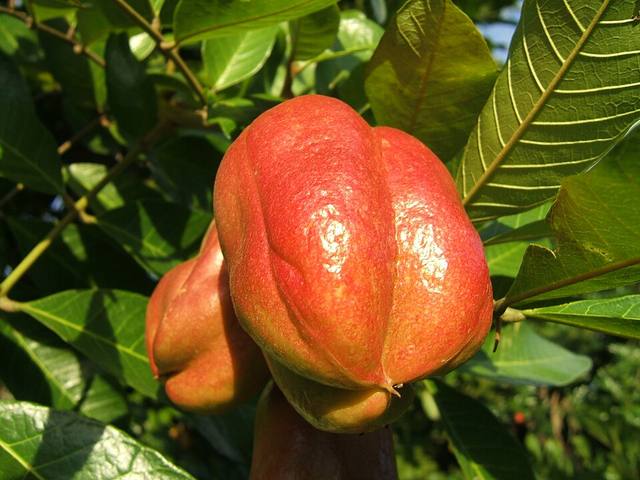
Jamaica's national fruit: creamy arils eaten cooked, only from pods that have opened on the tree by themselves.
Hardiness: zones 10 to 12
Light: full sun
Size: about 40 ft tall, 25 ft wide
Harvest: January to March
From: West Africa
Here: Too tender to overwinter outdoors on the Lake Erie shore (zone 6b to 7a): grow it in a pot and bring it in, or treat it as an annual.
Good for: food, wildlife.
Native to: West & Central African forests, African savannas & tropics. Hardy in zones 10 to 12.
The story
Ackee came from West Africa to Jamaica in the 1700s, and ackee and saltfish became the island's national dish. Its Latin name remembers Captain Bligh, who took the tree to Kew.
Planting
Full sun, a frost-free climate and well-drained soil.
Growing
A handsome, easy shade tree in the tropics. Prune to keep the fruit in reach.
Harvest and use
Wait until the red pod splits open on the tree by itself. Take only the cream-coloured arils, discard the black seeds and pink membrane, and boil before using.
What to watch for
Unopened or forced-open fruit, and the seeds, are seriously poisonous. This is a fruit to learn from someone who knows it.
Safety
Unripe ackee and its seeds are poisonous. Eat only the cream-colored arils from fruit that has opened on the tree by itself, cooked, with the seeds and pink membrane removed.
See if Ackee fits your yard
Free planner: enter your ZIP for frost dates, climate fit and a sowing calendar. No account, no ads, no tracking cookies.
More tropical and subtropical food plants
- Safou (African pear)
- Ambarella (vī)
- Long pepper (pippali)
- Mamey apple
- Stinking toe (West Indian locust)
- Chiuri (Indian butter tree)
General guidance, not professional advice. Conditions vary by yard and year; for local specifics ask your county extension office. Never eat a wild plant you cannot identify with certainty. Traditional uses are shared as history, not medical advice. © 2026 Sean Priest · Irie Orchard. Terms & credits · Privacy · Home