Artichoke
Cynara cardunculus var. scolymus
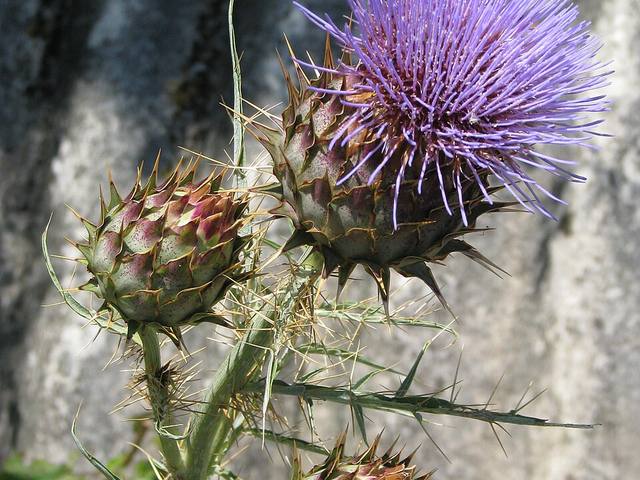
A giant thistle; let a few bloom for the bees.
Hardiness: zones 7 to 10
Light: full sun
Size: about 4 ft tall, 4 ft wide
Harvest: May to June
From: Mediterranean
Drought-hardy once established
Here: Hardy in the Lake Erie shore climate (zone 6b to 7a), so it can live outdoors in the ground.
Good for: food, pollinators.
Native to: Mediterranean. Hardy in zones 7 to 10.
The story
The Mediterranean. An artichoke is an unopened thistle flower. Left alone, it opens into a giant purple bloom that bumblebees sleep inside.
Planting
Full sun. Soil: rich, well-drained (pH 6.0–7.0). Spacing: 3–4 ft. Pollination: not needed for buds.
Growing
Water: deep, regular. Winter: Zone 7a is the very edge of its range: cut it down, cover the crown with a bushel of shredded leaves, and hope. Spring: Uncover after hard frosts end. Summer: Let one bud open: the huge purple thistle flower is a bumblebee magnet. Fall: Mulch heavily before hard freeze.
Harvest and use
Harvest: Jul–Aug buds (artichoke) or blanched stalks in fall (cardoon). First crop: buds in year 1 if started early indoors.
What to watch for
Winter kill, aphids, slugs.
See if Artichoke fits your yard
Free planner: enter your ZIP for frost dates, climate fit and a sowing calendar. No account, no ads, no tracking cookies.
More perennial vegetables, greens and herbs
General guidance, not professional advice. Conditions vary by yard and year; for local specifics ask your county extension office. Never eat a wild plant you cannot identify with certainty. Traditional uses are shared as history, not medical advice. © 2026 Sean Priest · Irie Orchard. Terms & credits · Privacy · Home