Kukumakranka
Gethyllis afra
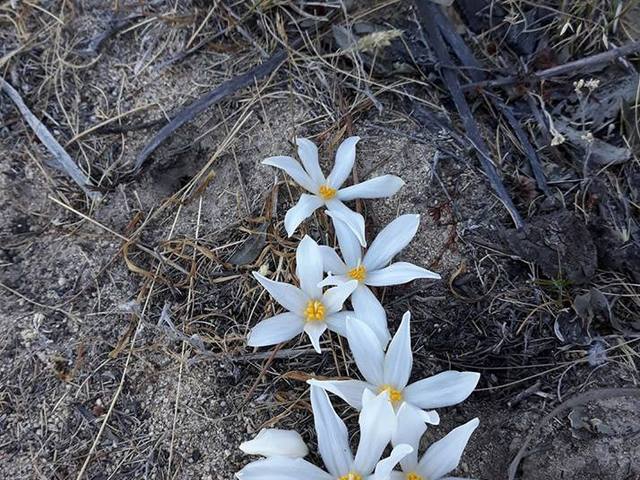
A bulb that hides all summer, then pushes up one perfumed, club-shaped fruit; it once scented rooms and brandy.
Hardiness: zones 9 to 10
Light: full sun
Size: about 0.5 ft tall, 0.5 ft wide
Harvest: September to October
From: Western Cape, South Africa
Drought-hardy once established
Here: Too tender to overwinter outdoors on the Lake Erie shore (zone 6b to 7a): grow it in a pot and bring it in, or treat it as an annual.
Good for: food, traditional use.
Native to: Cape of South Africa. Hardy in zones 9 to 10.
The story
Kukumakranka is a Khoekhoe name and one of the strangest plants of the Cape. In summer a white flower appears from bare ground. Months later, in autumn, a perfumed fruit pushes up, and only then, with the winter rain, do the spiralled leaves emerge.
Planting
Full sun and deep sandy soil that is dry in summer. Grow it in a deep pot of sand elsewhere.
Growing
Water only in the cool season. It must stay dry while dormant.
Harvest and use
The fruit smells of strawberry and banana and scents a whole room. It was laid among linen and steeped in brandy.
What to watch for
Summer water rots the bulb. It is rare in the wild, so buy only nursery-raised bulbs.
Safety
Medicinal uses here are shared as history, not advice. Kitchen amounts are fine for most people, but teas, tinctures and supplements can interact with medicines and aren't safe for everyone, especially in pregnancy, while breastfeeding, for children, or with liver or kidney problems. Ask a doctor or pharmacist before taking any plant as medicine.
See if Kukumakranka fits your yard
Free planner: enter your ZIP for frost dates, climate fit and a sowing calendar. No account, no ads, no tracking cookies.
More native and wild plants
General guidance, not professional advice. Conditions vary by yard and year; for local specifics ask your county extension office. Never eat a wild plant you cannot identify with certainty. Traditional uses are shared as history, not medical advice. © 2026 Sean Priest · Irie Orchard. Terms & credits · Privacy · Home