Padam (wild Himalayan cherry)
Prunus cerasoides
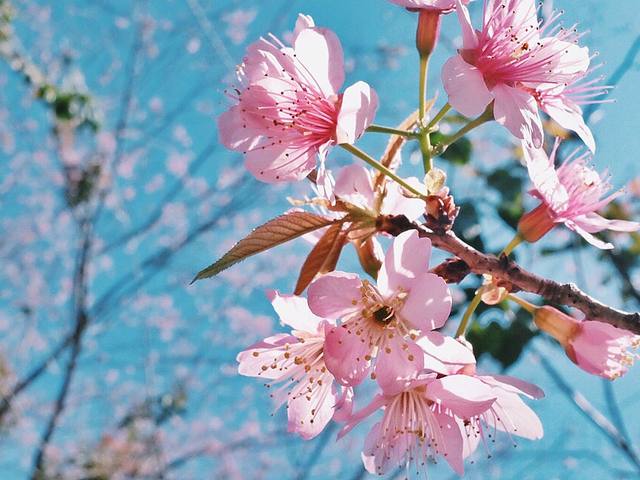
Blooms pink in late autumn when nothing else does, which is exactly why hill beekeepers plant it.
Hardiness: zones 8 to 10
Light: full sun
Size: about 50 ft tall, 30 ft wide
From: Himalaya to northern Thailand
Here: Too tender to overwinter outdoors on the Lake Erie shore (zone 6b to 7a): grow it in a pot and bring it in, or treat it as an annual.
Good for: pollinators, wildlife.
Native to: Himalaya & Indian hill country, South & Southeast Asian tropics. Hardy in zones 8 to 10.
The story
Padam flowers in October and November, against the season. In the hills of Uttarakhand it is a sacred tree whose twigs are used in worship, and it is planted near homes and shrines.
Planting
Sun and well-drained soil where winters are mild.
Growing
Prune lightly, if at all, after flowering.
Harvest and use
A cloud of pink blossom in late autumn that carries bees into winter. Birds eat the small sour cherries.
What to watch for
Late spring frosts on new growth. It is short-lived, like most cherries.
See if Padam (wild Himalayan cherry) fits your yard
Free planner: enter your ZIP for frost dates, climate fit and a sowing calendar. No account, no ads, no tracking cookies.
More native and wild plants
- Kurrajong
- Saguaro
- Prairie turnip (tipsin)
- Sundari (mangrove)
- Wild date palm (khejur)
- Coral tree (mulungu-do-litoral)
General guidance, not professional advice. Conditions vary by yard and year; for local specifics ask your county extension office. Never eat a wild plant you cannot identify with certainty. Traditional uses are shared as history, not medical advice. © 2026 Sean Priest · Irie Orchard. Terms & credits · Privacy · Home