Kurrajong
Brachychiton populneus
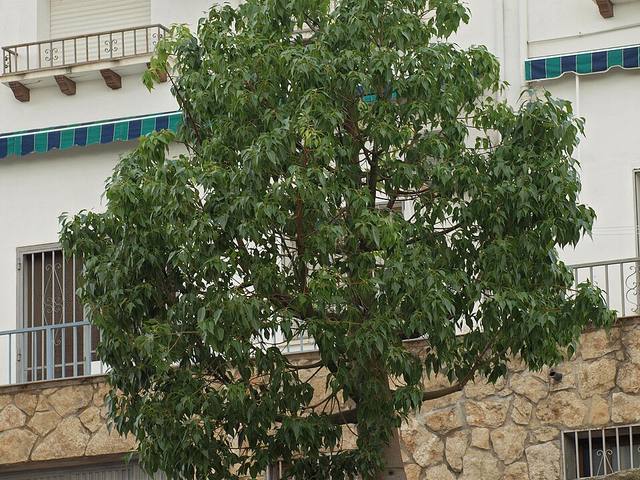
The drought tree of the inland: shade, emergency fodder, and seeds that Aboriginal peoples roasted.
Hardiness: zones 8 to 11
Light: full sun
Size: about 40 ft tall, 25 ft wide
Harvest: June to August
From: Inland eastern Australia
Drought-hardy once established
Here: Too tender to overwinter outdoors on the Lake Erie shore (zone 6b to 7a): grow it in a pot and bring it in, or treat it as an annual.
Good for: food, wildlife, pollinators.
Native to: Australia. Hardy in zones 8 to 11.
The story
The kurrajong stores water in its swollen trunk and holds its leaves through droughts that brown everything around it. Aboriginal peoples roasted the seeds, twisted the bark into rope and nets, and dug water from the roots. Farmers lop it as emergency feed.
Planting
Full sun and well-drained soil. It takes heat, drought, frost and limestone.
Growing
Water to establish, then leave it alone. It is slow at first.
Harvest and use
Boat-shaped pods in summer holding yellow seeds. Roast them and rub off the hairs through a cloth: they are nutty and rich. Cream bell flowers feed bees.
What to watch for
The hairs around the seeds irritate skin and eyes; wear gloves and never rub your face.
See if Kurrajong fits your yard
Free planner: enter your ZIP for frost dates, climate fit and a sowing calendar. No account, no ads, no tracking cookies.
More native and wild plants
- Saguaro
- Prairie turnip (tipsin)
- Sundari (mangrove)
- Wild date palm (khejur)
- Coral tree (mulungu-do-litoral)
- Caraguatá (forest bromeliad)
General guidance, not professional advice. Conditions vary by yard and year; for local specifics ask your county extension office. Never eat a wild plant you cannot identify with certainty. Traditional uses are shared as history, not medical advice. © 2026 Sean Priest · Irie Orchard. Terms & credits · Privacy · Home